

Acrylic Processing Aid (ACR)
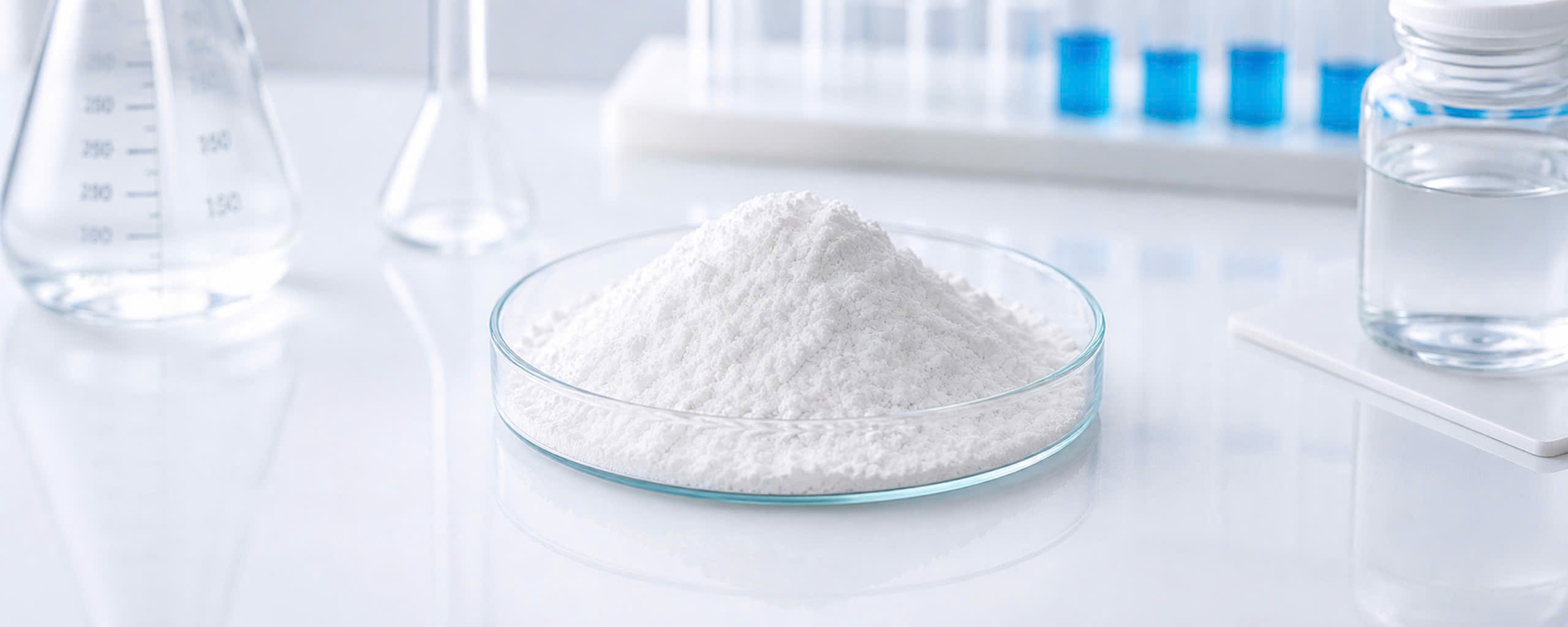
Acrylic processing aid (ACR) is a high-molecular-weight acrylic polymer additive synthesized primarily through emulsion polymerization of selected Acrylate and Methacrylate monomers, typically obtained as a fine white powder. Its molecular architecture and controlled compatibility with Polyvinyl chloride (PVC) enable effective modification of melt rheology and fusion behavior during thermal processing. Through increased interparticle friction, polymer chain interpenetration, and molecular entanglement, ACR accelerates PVC gelation, enhances melt cohesion, and improves melt homogeneity under mechanical shear. Unlike specialized Acrylic impact modifiers, which primarily increase impact toughness through elastomeric energy-dissipation mechanisms, conventional ACR processing aids are engineered predominantly for fusion promotion, melt strength enhancement, and surface quality optimization. These characteristics contribute to consistent extrusion and molding performance, reduced surface irregularities, and improved dimensional control. Processing efficiency depends on polymer molecular weight, monomer composition, additive concentration, lubricant balance, and operating conditions.

Impact Resistance
ACR can improve the impact performance of PVC by promoting more uniform particle fusion and reducing structural defects within the polymer matrix. Improved melt homogeneity may reduce localized stress concentrations and premature crack initiation. However, significant impact modification generally requires specialized Acrylic impact modifier grades. Mechanical performance depends on polymer morphology, modifier composition, fusion quality, additive concentration, and processing conditions.

Toughness and Flexibility
ACR contributes to the mechanical integrity of PVC compounds by improving fusion uniformity and polymer chain entanglement during thermal processing. A more cohesive polymer matrix can reduce brittle failure associated with incomplete fusion. However, substantial improvements in toughness and flexibility require suitable impact modifier chemistry. Final mechanical behavior depends on polymer composition, modifier morphology, processing temperature, and formulation compatibility.
Surface Quality
ACR enhances PVC surface quality by regulating melt viscoelasticity and promoting homogeneous fusion during extrusion and molding. Its high molecular weight increases melt cohesion and reduces localized flow instabilities that contribute to surface irregularities. Appropriate incorporation can minimize melt fracture and improve surface uniformity. Surface characteristics depend on molecular weight distribution, additive concentration, die geometry, shear conditions, and processing temperature.

Fusion Promotion
ACR accelerates PVC fusion by increasing interparticle friction and facilitating molecular chain interpenetration under thermal and mechanical shear. Its polymeric structure promotes the transition from discrete PVC particles into a homogeneous, entangled melt network. Controlled fusion improves melt cohesion, processing uniformity, and structural integrity. Fusion efficiency depends on ACR molecular weight, formulation composition, lubricant balance, processing temperature, and shear intensity.
Global Industrial Applications

Construction
The construction industry is a key segment in infrastructure development across every nation, covering diverse applications such as flooring systems,...
Learn more
Pulp & Paper
Opportunities for growth. Our products and services include cost-effective to high-performance products for filling and coating and functional coatings, alongside...
Learn more
Polymer
The polymer industry is a cornerstone of modern manufacturing, covering a wide range of applications from plastics to rubber. It...
Learn more
Personal care & Home care
The Personal care & Home care industry is a fast-growing and dynamic sector, with increasing demand for safe, high-performance, and...
Learn moreWhy choose us!
ACR improves melt flow and processing performance, ensuring better fusion and surface quality in PVC products.
TLD Vietnam offers customized solutions to optimize production efficiency and cost control. We provide competitive pricing and consolidated supply, along with technical support for formulation enhancement and process stability, supported by flexible service.
2
FACTORIES
Total production capacity of 76,000 tons per year
300
+
GLOBAL CLIENTS
Trusted by hundreds of customers worldwide for reliable chemical solutions
Up to
30
%
COST REDUCTION
Our exclusive all-in-one chemical package helps customers reduce overall
production costs by 25-30%